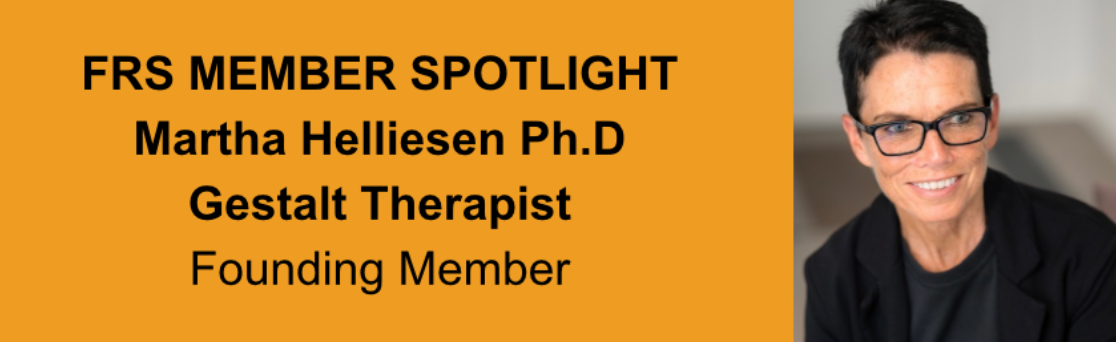
Originally from Norway, where she earned a Master’s degree in Physiology, she immigrated to the United States in 1989 to pursue a career in neuroscience. After spending several years working long hours in a research laboratory, she realized that laboratory research was not the path she wished to follow. In the mid-1990s, she transitioned to a clinical setting, working directly with people rather than laboratory animals.
She relocated to New York City, where she became a licensed massage therapist and Gestalt psychotherapist. Pursuing these two disciplines simultaneously reflected her desire to integrate the body and the brain in clinical practice. While building a successful private therapy practice in New York, she also completed an interdisciplinary Ph.D. in Psychology, Sexology, and Neuroscience, expanding her expertise to include sex therapy.
When the Fascia Research Society was established in 2012, she immediately recognized it as the interdisciplinary community she had long been seeking. She enthusiastically became a member, and over the past fourteen years the Society has remained a constant source of inspiration, collaboration, and scientific knowledge.
In 2013, she attended the first Fascia Fitness workshop led by Divo Müller and Tom Myers in Maine, an experience that further inspired her to develop her own integrative approach to therapy and healing. Two years later, participation in the year-long GIFT (Gray Institute for Functional Transformation) program reinforced her interest in using movement and the body as powerful tools for facilitating both physical and psychological change.
Her understanding of fascia has profoundly shaped her work as a psychotherapist and sex therapist. When appropriate, she integrates bodywork and movement into treatment with the intention of influencing fascial function. She views the resulting modulation of the fascial system as an important pathway for influencing brain function and, consequently, the emotional lives of her clients.
Throughout more than 25 years in private practice, she has worked extensively with men of all ages experiencing erectile dysfunction. While psychogenic factors are widely recognized as common contributors to erectile problems, her Ph.D. research identified a previously underappreciated relationship between gait and erectile function. This concept was further supported by James Earls' work, including Born to Walk, as well as by the Gray Institute’s emphasis on gait mechanics and the kinetic chain extending from the foot throughout the body.
Her therapeutic approach combines reducing anxiety through increased awareness of breathing and bodily sensations while making subtle adjustments to gait. Over many years, this approach has consistently produced positive outcomes for clients with erectile difficulties. She hypothesizes that fascial connections between the foot and the pelvic floor play a significant role in these results. She has shared this treatment model through her teaching of sexology students in Denmark and in workshops for psychotherapists across the United States, where it has been well received.
Committed to lifelong learning, she has closely followed Dr. Robert Schleip’s educational webinars summarizing both his own research and developments across the field of fascia science. His work has enabled her to remain current with emerging research and continues to serve as an important source of professional inspiration.
She was particularly intrigued by research demonstrating that fascia is an active, contractile tissue richly supplied with sympathetic nerve endings. These findings provided valuable insight into the physical manifestations of stress and anxiety commonly observed in her clinical practice. Although awareness of mental health and mind-body therapy has grown considerably, many clients still struggle to understand the relationship between emotional distress and physical tension or pain.
Among the many studies presented by Dr. Schleip, she found the work of Michalak and the collaborative research by Overman, Schleip, and Michalak especially relevant. Their findings linking fascial stiffness, pain, and depression have proven particularly useful in helping clients understand the reciprocal relationship between fascial health, brain function, and emotional well-being. Together with Joeri Calsius' work on interoception, these studies have further strengthened her clinical use of movement to enhance body awareness and modulate neuromyofascial connections.
She hypothesizes that intentional movement performed within the therapeutic relationship can influence interoceptive input to the brain, thereby affecting broader neuronal networks and ultimately facilitating behavioral change. She also emphasizes the importance of the therapist-client relationship itself. Research in neuroscience, particularly by Allan Schore and others, together with observational studies in psychology, has consistently demonstrated that the quality of the therapeutic relationship significantly influences both brain function and treatment outcomes. While the mechanisms through which interpersonal interaction may influence fascial physiology remain unclear, her clinical experience suggests that the therapist's authentic presence often contributes more to successful outcomes than technique alone. She believes that genuine, moment-to-moment interaction helps clients remain present, reducing anxiety, decreasing sympathetic activation, and promoting relaxation within the fascial system.
Her background in neuroscience continues to shape her clinical philosophy. She believes that all behavior, thought, and emotion emerge from the dynamic interaction of neurons and neuronal networks. Modulation within these interconnected systems produces lasting changes in how individuals think, feel, and behave. In her view, the therapeutic changes observed in clinical practice reflect neuroplastic adaptations within these networks.
Her professional journey has taken her from two decades of clinical practice in New York City to ten years in Miami, several years in the Netherlands, and, since 2023, to Lisbon, Portugal. In every location, she has been privileged to work with open-minded and intellectually curious clients who have appreciated her integrative mind-body approach. Through her work, many have developed a deeper understanding of the role of fascia in both physical and emotional well-being and have adopted lifestyle changes that support long-term fascial health.
Working with clients from diverse cultural backgrounds has also given her valuable insight into the profound influence of culture and tradition on both mind and body. She has observed marked differences in emotional expression, bodily tension, and attitudes toward sexuality across cultures. Adapting her therapeutic approach to meet clients within their own cultural context has enriched both her professional development and her personal growth.
She believes that fascia research has not yet fully explored the influence of fascia on brain function and mental health, while the fields of psychology and sex therapy continue to underestimate the importance of the body's richly innervated fascial system. Although numerous mind-body therapeutic approaches exist, she sees a continuing need for deeper scientific understanding of the relationship between the brain and fascia.
She hopes that future research will further illuminate the brain-fascia connection, helping to modernize professional education, challenge outdated perspectives, and ultimately improve clinical care for patients worldwide.